
The Thrill of a Field Studies Safari: Exploring Kenya’s Iconic National Parks
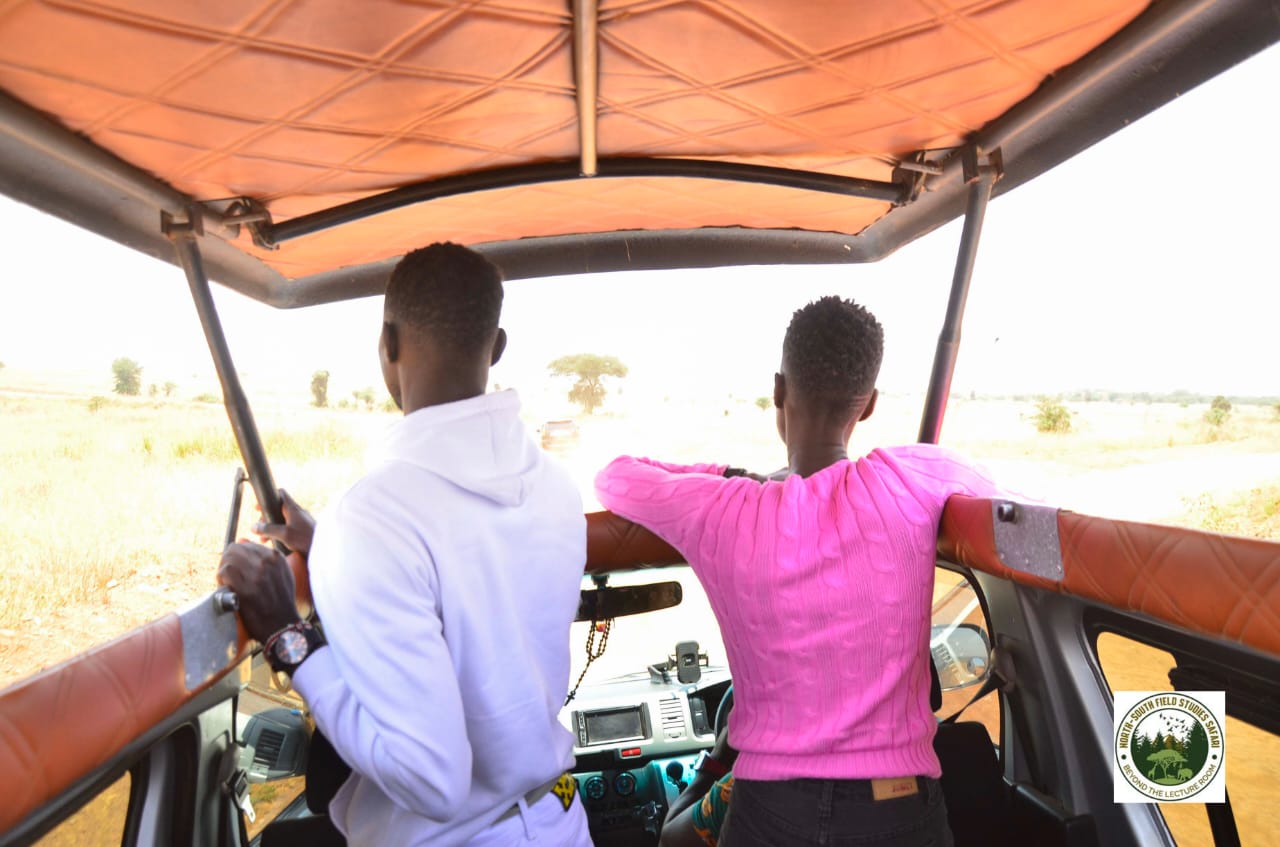
The purpose of education is to prepare students for life beyond school through tactics like field studies. Of course, achieving this feat requires more than just the knowledge students acquire within the four corners of the classroom. Incorporating learning experiences outside the classroom enhances the learning process, enabling students to have first-hand experience with the course content as it exists in the world. That’s why at North South Field Studies Safari (NSFSS), we offer a unique study abroad program that incorporates field studies, such as wildlife study safaris.
In this article, we’ll look at some of Kenya’s iconic national parks you will explore as you embark on our wildlife study safari.
The National Parks to Tour for Field Studies While in Kenya
Kenya is, without a doubt, among the best countries for a wildlife safari, offering a wide range of breathtaking wildlife, expansive landscapes, and fascinating cultures. When you enrol for our beach-to-bush program, you will get the opportunity to explore the country’s beauty as well as experience and learn the impact of climate change in parts of Kenya, some national parks included, and the mitigation measures in place to ensure environmental sustainability.
That said, here are the four national parks that we will take you to to get the most out of your wildlife study safari:
1. Nairobi National Park
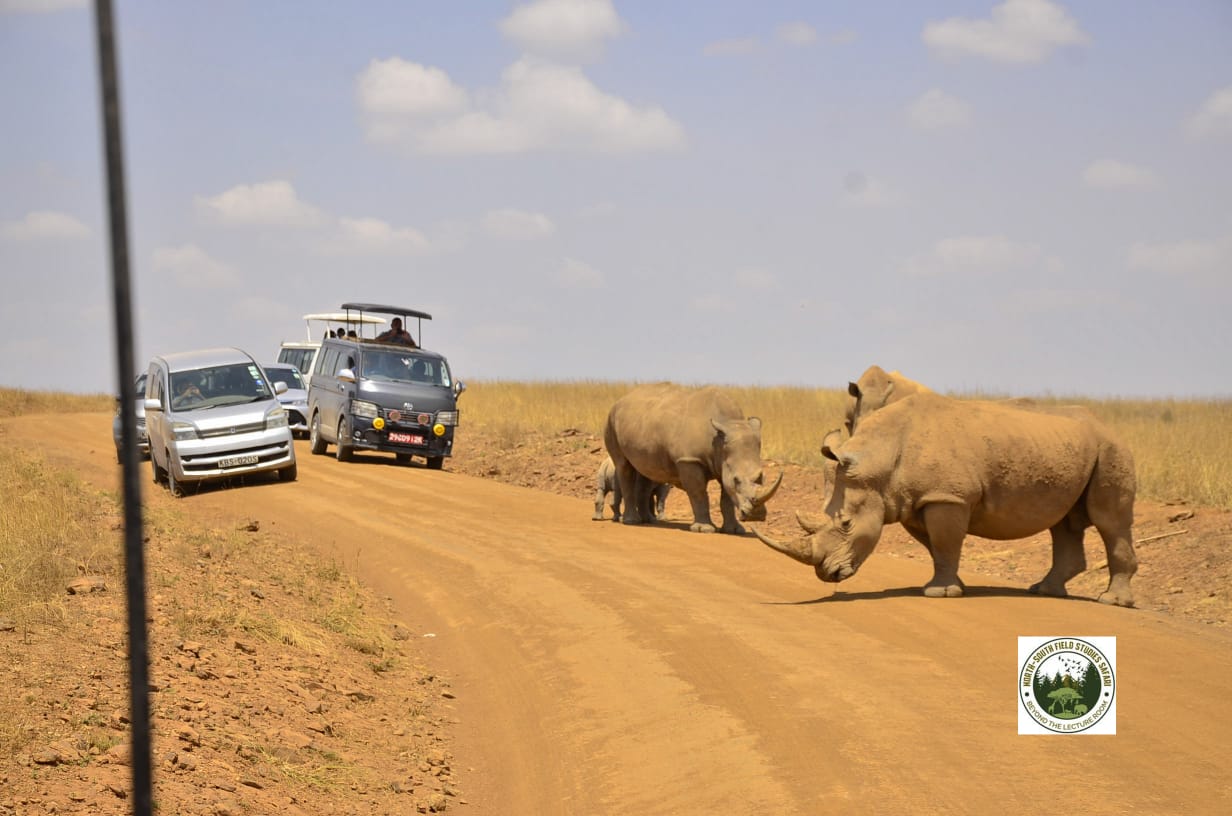
Nicknamed the Kifaru Ark (Swahili for rhino), Nairobi National Park is a wildlife haven located a short drive from Nairobi’s central business district. This means if you live in the city or within its environs, you can take a short drive after work or classes, go for a fulfilling game drive, and still make it back home in the evening having had a full safari. We’ll also be your doorway to exploring one of the world’s rare phenomenons: A national park within city limits because it’s only in Kenya that you get a capital city with a national park in it! Ready for the adventure yet? Let’s dive deeper.
Nairobi National Park boasts all the big five (rhino, leopard, lion, and African buffalo), except the elephant, among other games. The park also boasts over 500 bird species, meaning it’s an excellent place to visit if you are into bird watching or want to study African bird species
However, this park has its share of challenges. For one, there’s human-wildlife conflict, which arises due to the park’s small size and proximity to the city, which often leads to severe repercussions. For instance, lions occasionally break out from the park and end up attacking humans, who, in turn, retaliate by killing these animals. Visiting this park and witnessing such phenomena will offer a perfect chance to study environmental protection vs economic development and explore how to implement sustainability measures.
Other complexities this park faces include:
- A motorway passing at the edge,
- A Major infrastructural development–the Standard Gauge Railway passing right in the middle, which eats into its real estate,.
- Nearby industries that pollute the air,
- Dry water bodies in and around the park,
- A flight path above the park, with airplanes occasionally roading by headed to the nearby international airport.
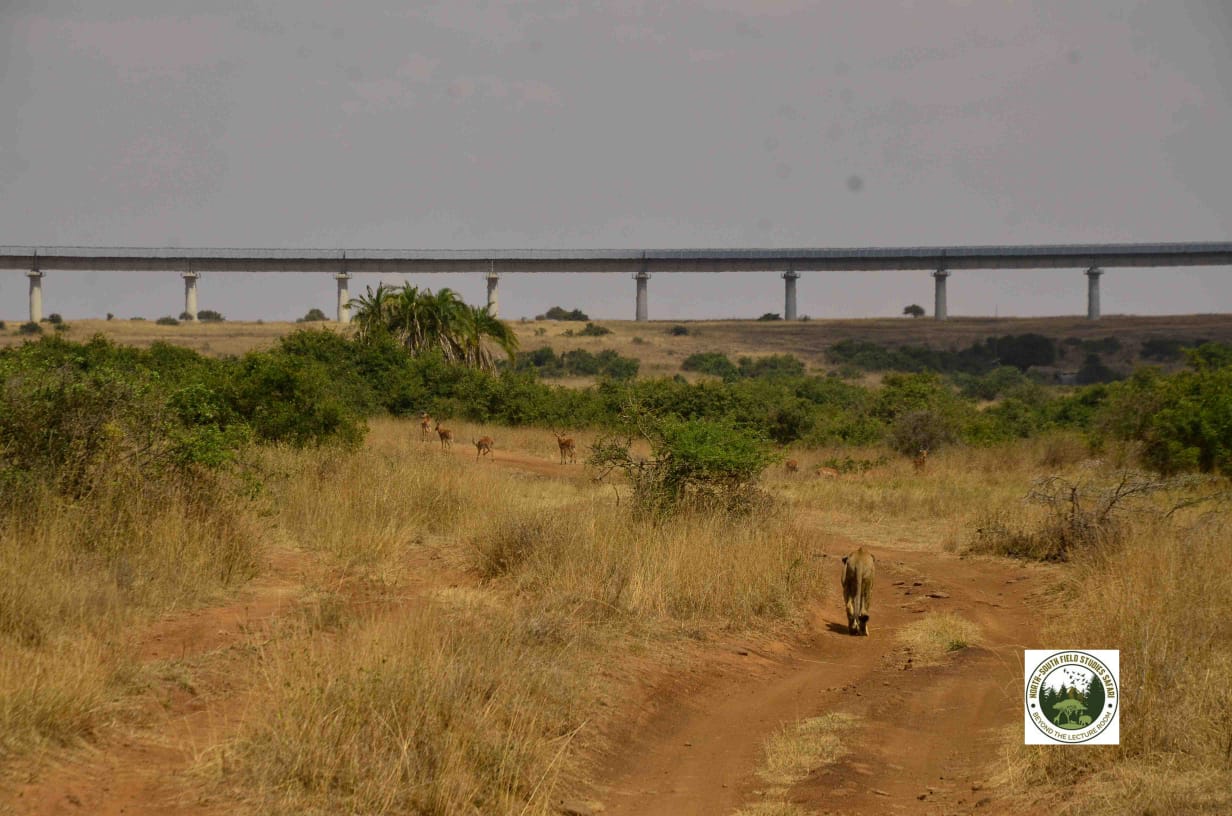 A lion in Nbi National Park lurking for a kill in the backdrop of the SGR. Courtesy: NSFSS
Such issues clearly depict an encroachment on wildlife’s habitat, disruption of their migration routes, and competition between humans and animals. These lessons will help you learn firsthand about human-induced environmental and ecosystem challenges and formulate solutions.
Challenges aside, we have the best tour guides waiting to take you around. You’ll enjoy all the fantastic wildlife and scenery the park offers, unwind, and see first-hand the world-renowned animals that only such a safari can offer.
Catch majestic buffaloes sunbathing by the watering hole, rhinos crossing your path with their young ones, a lion lurking in the bush timing a herd of gazelles. You’ll also catch the tall ostrich obliviously crossing the grassy savanna, an uncountable number of zebras, birds, antelopes, and astonishing giraffes further beautified by the tall trees within which they hide grazing
2. Indulge in Field Studies in Masai Mara National Park
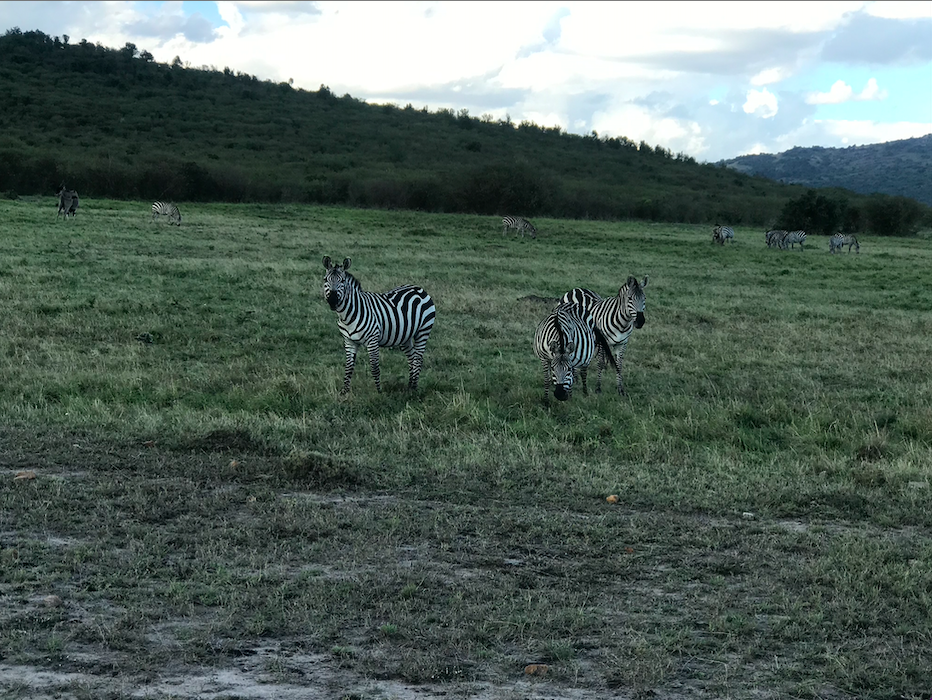
Masai Mara National Park is a wildlife haven situated in the southwest of Kenya. It borders the Serengeti National Park in Tanzania and is among the largest parks in Africa, covering approximately 1510 kilometres.
It’s a unique for its spectacular wildlife and diverse ecosystem. It is a premier location for tourists looking to witness the infamous wildebeest migration, which is one of the ten wonders of the world. You’ll also have the unique opportunity to spot lions, giraffes, cheetahs, elephants, and African buffaloes, among other animals, in their natural habitat, unconfined and free to roam the expansive wilderness in this park.
If you’re lucky, you can spot the big cats of the mara, like the cheetah.
The park isn’t short of spectacular marvels. On a good day, you’ll catch one of the big fives in action chasing a kill or feeding peacefully afterwards, giving you an unfiltered view and experience only seen in Nat Geo.
Other attractions to look forward to when you visit the Masai Mara National Park include the sprawling savannah. The rolling hills, and the course of the dramatic Mara river crossings also await. The elegant unique secretary bird will treat you to its beauty as it catwalks by in its outfit headed to its day out in the wilderness office. Not to mention passing by the Kenya-Tanzania border within the park; the only time you’ll ever get to cross a visa-mandatory border visa free!
The expansive and rich ecosystem is a perfect site for studying ecosystem interdependence, protected species conservation and much more.
3. Amboseli National Park
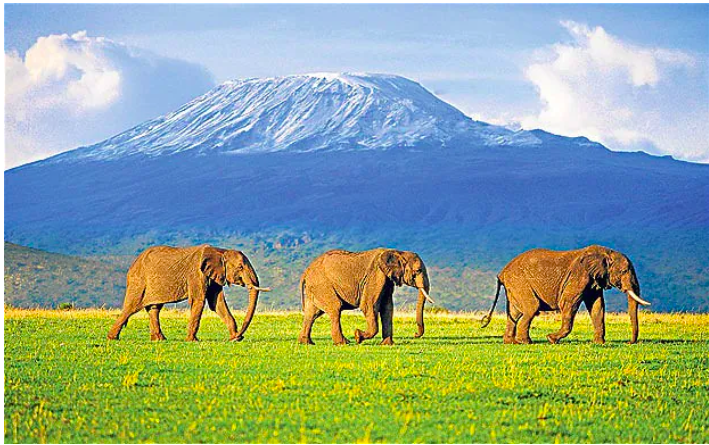
Amboseli National Park is located in the Rift Valley province of Kenya. It measures approximately 392 square kilometres and covers a vast ecosystem that spreads across the Kenyan-Tanzania border.
This touristic attraction is among the top tourist destinations in Kenya, and rightly so. Its signature attraction is the sight of large herds of elephants set against the backdrop of the stunning view of Mount Kilimanjaro.
Besides the elephants, you can also spot zebras, lions, wildebeests, hyenas, and other animals, as well as over 300 bird species, including water birds like pelicans and kingfishers.
Amboseli National Park prides itself on having an endless groundwater supply, and Lake Amboseli provides water for animals in the park. Even so, the climatic pendulum in the park and the region in which it is located often swings from flood to drought, forcing the animals to migrate to and from the park during various seasons. Such is a perfect phenomenon for an outdoor experiential food and water systems class.
Another attraction in the park is the opportunity to meet and mingle with the Maasai people to learn and share their culture.
That said, like other parks, Amboseli National Park has its share of challenges. For one, while the SGRS, which passes through the park, helps with transportation, it also disrupts the migration routes.
Additionally, and perhaps the most common in this park, is the frequent human-wildlife conflict. It often arises due to the fact that the Maasai people live with the animals in close proximity. This phenomenon offers a one-of-a-kind field study of man-wildlife interactions and key practical tools and approaches to protected area management and design.
During your adventure in Amboseli, you’ll have one-on-one interactions with the Masai. Among the experiences in store are joining their day-to-day activities like tending to cattle, building manyattas, cooking, song and dance, and much more. It’s one of the few communities where it’s the woman’s task to build. Our Study Abroad program will introduce you to such cultural interactions and more for a lifetime’s adventure.
4. Aberdare National Park
Aberdare National Park is another great place to visit during your wildlife study safari. Thanks to the several tourist attractions available here, a visit to this park is worthwhile. From the sprawling Aberdare ranges and deep ravines to the perfect mix of animals and vegetation, this park is one of the most thrilling safari destinations.
Aberdare National Park has various habitats that are home to a wide variety of animals, including antelopes, red bucks, elephants, colobus monkeys, and wild dogs, among other animals. You can also find various bird species living in this park.
Other fascinating features in this park include Chania Falls, Kinangop Peak, and rugged hiking trails..
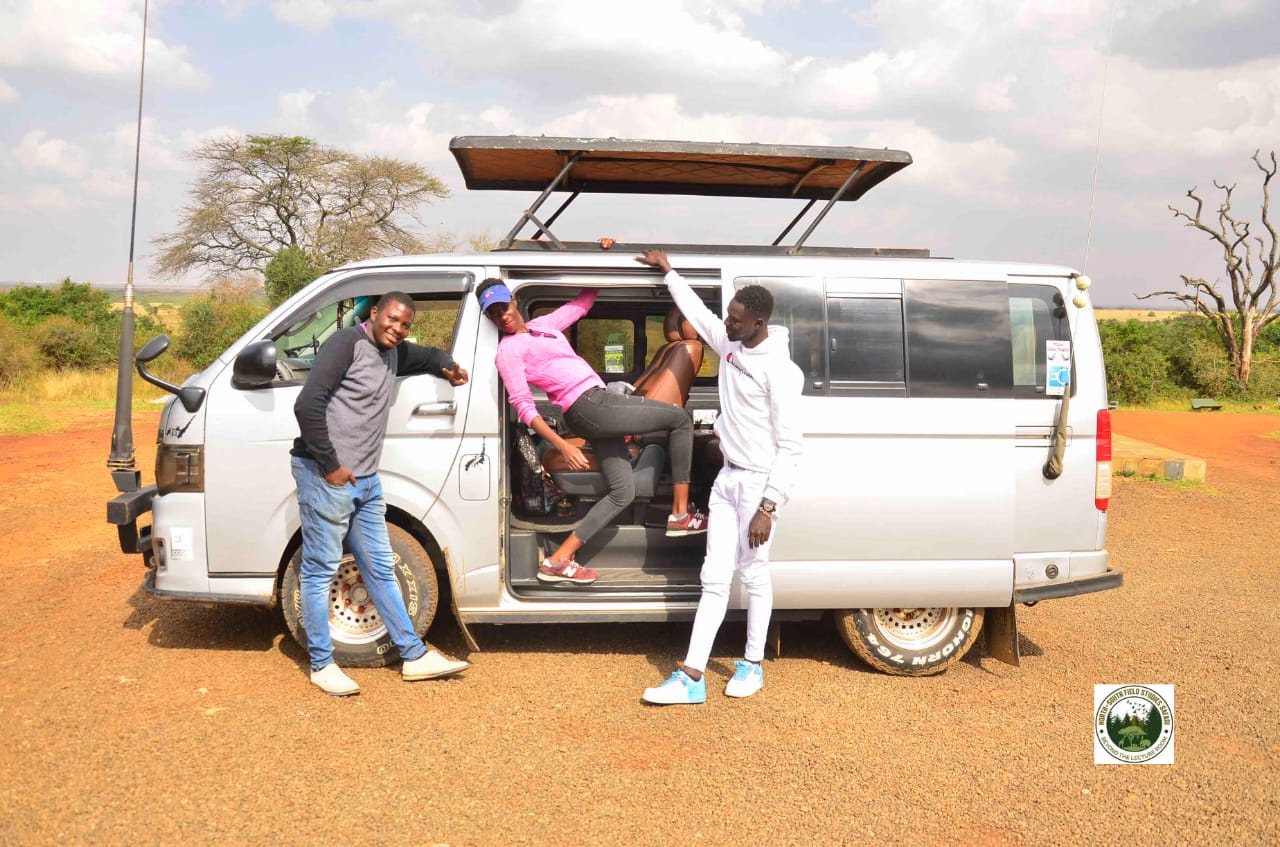 Students out on a game drive in Kenya. Courtesy: NSFSS
Study and Explore World-Renown Parks With NSFSS
Take a break from in-classroom learning and open yourself to unique opportunities and impactful insights by enrolling in our field studies program. Our adventurous Study Abroad course covers everything from experiencing well-renowned parks to sandy beaches and local initiatives geared towards ensuring sustainability and climate action. And you stand to gain lessons ranging from understanding various wildlife and terrestrial ecosystems to the impacts of climate change and the mitigations in place. Book a discovery call with us today to get started on your unique study safari for life-changing lessons while you explore the world and tick that bucket list.
N/B: This article is written by human writers and not automated AI systems

2 Responses